

The way you and your dog act can have an impact on others, including the unique and spectacular life forms that call the Sefton Coast home.
Coastal birds
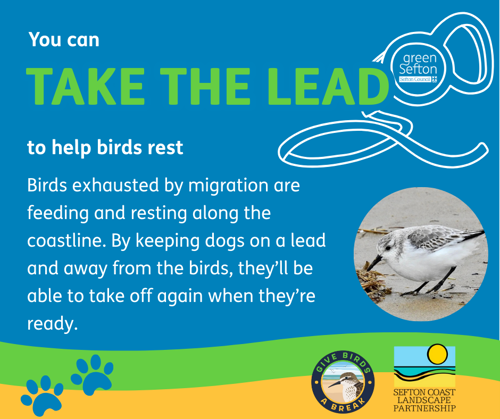
Dogs should not be allowed to chase birds on the beach, especially large flocks of roosting waders, terns and gulls, all of which use this coastline as an essential stop off or breeding site along the East Atlantic Flyway.
It is a criminal offence under the Wildlife and Countryside Act 1981 to allow your dog to disturb these birds.
Green Sefton proudly supports the RSPB's "Give Birds a Break" campaign and regularly raise awareness of how important it is to give nesting birds their space.
Pool and pond life
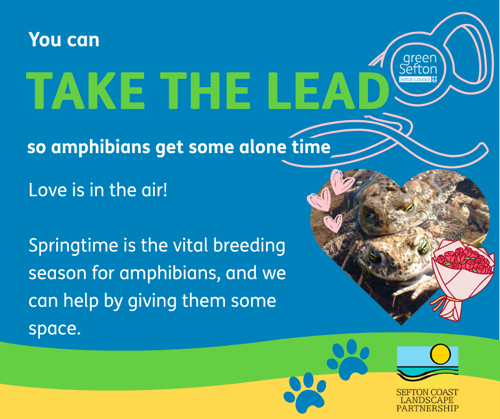
There are many pools across our coastline which are integral for the survival of Natterjack Toads. These pools are the only place the toads will breed and allowing dogs into their nesting pools can have a detrimental impact on their survival.
Evidence shows that dogs entering pools kick up silt and their flea treatment can contaminate bodies of water and be harmful to aquatic life such as Natterjack Toads.
Many species, such as the Natterjack Toads, reappear after the winter months and mate in the spring. Doing so without disturbance is what will keep these rare specimens surviving and thriving.
Please keep clear of pools in places such as dune slacks (small valleys in the dune system which are created through erosion).
Thinking of others
Whether your dog is the quiet type or is excited by everything, bear others in mind when you're walking on the coast. This includes:
- Other dogs. Even if your dog isn't the nervous type, another dog nearby might be. Try to keep your distance and speak to other dog walkers about what their dog(s) can handle.
- Other people. Not everyone is a dog person and may appreciate the space.
- Horses. If there are horse riders on the beach, keep clear so the horses aren't spooked. This is as much to protect you and your dog as it is to protect the horses, as they may kick out.
Grazing cattle and livestock
Each winter, the Council’s Green Sefton service brings grazing animals onto the Local Nature Reserves to help control vegetation growth.
This, in turn, encourages diverse plant species to grow and Sefton’s rare dune specialists such as Natterjack Toads, Sand Lizards and Northern Tiger Beetles to thrive.
English Longhorn cattle from Lancashire Wildlife Trust can be seen on the Ainsdale and Birkdale Local Nature Reserves from October to April.
There are signs reminding beach visitors of need to keep dogs on leads, to close gates and to be mindful of the cattle and sheep during the grazing period.
They are docile animals that are used to seeing people, but we do suggest that if people do come across the cattle, they should turn and walk another way to avoid disturbing or spooking them.
There is a PSPO in place that requires visitors to put dogs on a lead to ensure they are under control, just as they would in any farmer's field where livestock are present.
Learn more in the video below:
Online location system
This season we have an online monitoring system, which helps visitors to the reserves to track the animals’ locations within the enclosures. There is a QR code on the posters at the reserve entrances – people can scan the code to see a map of the reserve that should show where the cattle are.
Dog Exclusion Zones
Across the entirety of the Sefton coastline, there are only two dog exclusion zones. They're in place to protect bathing water on popular beaches.
They are also only in place between 1st May and 30th September.
Where are the exclusion zones?
- Southport beach is free of dogs starting from the Pier south towards Pleasureland (for 555m) and to the tide line.
- Ainsdale Beach is free of dogs 200m either side of the main beach entrance and to the tide line.
You will see where they are because of the clear signage that is in place while the exclusion zones are in effect.